Svenska
 Deutsch





Cart
Your cart is empty, but doesn't have to be..
Your cart is empty, but doesn't have to be..
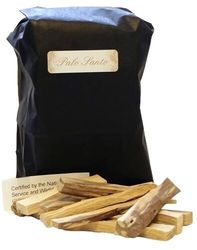
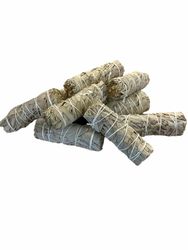
The sticks are approximately 8-10 cm long, and the number of sticks may vary as they weigh differently.
The effects of Palo Santo are extensive. It has been described as magical, mystical, rare, sacred, and unique. This fragrant wood is highly valued spiritually by shamans and healers and has been used in sacred rituals and for purification for thousands of years by the indigenous people of South America. It is harvested without causing harm to living trees and comes from naturally fallen trees in the forests of Ecuador. Light the stick, let it burn for a few seconds before blowing out the flame. Let it smolder, and fan the smoke over your body or other objects you wish to cleanse, including your entire room, your whole house, or your car. Palo Santo has a light, sweet fragrance, and most people can immediately feel its positive purifying effect, even if they are not usually sensitive to energy.
The bag contains 500g.
Certified by the National Forest Service and Wildlife of Peru (SERFOR).
Palo Santo means "holy wood" in Spanish and comes from the tree Bursera graveolens , which grows naturally in parts of South America, including Ecuador and Peru.
Known for its distinctive scent, Palo Santo has been used for generations in various cultural and ceremonial contexts. When lit, it releases a warm, aromatic scent with notes of wood, citrus and resin.
Today, Palo Santo is used by people all over the world. Some appreciate its natural scent in the home, while others use it as part of meditation, energy medicine, ceremonies, or other practices that focus on presence, intention, and connection.
Palo Santo has become particularly popular among people looking for simple ways to create a moment of stillness, focus, or reflection in their everyday lives.
There are different traditions and ways to use Palo Santo. Common to many is an appreciation for its scent, its history, and the place it has had in various South American cultures over the generations.
Palo Santo is used in many different ways and how it is used varies between people, traditions and contexts.
A common method is to light one end of the wooden stick, let it burn for a few seconds, and then gently blow out the flame so that a light smoke develops.
Many people use Palo Santo:
• Before meditation or ceremony
• To create a calm and pleasant atmosphere in the home
• As a moment for presence, focus or reflection
• In working with intention, energy medicine or traditional rituals
• To scent a room in a natural way
Some let the smoke spread through a room, while others carry it around their body, their ceremonial tools, or objects used in rituals and spiritual work.
There is no "right" way to use Palo Santo. Over time, many people develop their own rituals and ways of working with the wood based on their needs, experiences and traditions.
For many, its use is not just about the scent itself, but also about creating a moment of presence in an often hectic everyday life.
Palo Santo has been used for generations in various parts of South America, where the wood has been appreciated for its fragrance and its place in cultural and ceremonial contexts.
How Palo Santo has been used has varied between different regions, traditions, and people, so there is no single story or method that represents all traditional uses.
In many contexts, Palo Santo has appeared in rituals, ceremonies and practices where presence, intention and relationship with nature have played an important role.
In recent decades, Palo Santo has also been appreciated by people around the world who work with meditation, energy medicine, ceremony, and various forms of nature-based spirituality.
For us, it is important to approach these traditions with respect.
Palo Santo is not just a fragrant wood. For many people, it is also part of a cultural context, a history, and a living heritage that deserves to be treated with care.
We therefore see Palo Santo as more than a product.
We see it as a craft from nature that carries with it stories, relationships and traditions from the places where it has been used for generations.
Palo Santo means "holy wood" in Spanish and comes from the Bursera graveolens tree, which grows naturally in parts of South America. The wood is prized for its characteristic scent and has been used for generations in various cultural and ceremonial contexts.
A common way is to light one end of the wooden stick, let it burn for a few seconds, and then blow out the flame so that a light smoke develops. Many people use Palo Santo for meditation, ceremony, or to create a pleasant atmosphere in the home.
Palo Santo has a warm and aromatic scent with notes of wood, citrus, resin and a slight sweetness. Many people appreciate its soft and natural character.
Our Palo Santo comes from Ecuador and is sourced from naturally fallen trees and branches. No living trees are cut down to produce this Palo Santo.
No. Palo Santo is a natural wood that is used directly in its original form. Incense is usually made from various plant materials, resins, woods and herbs.
It varies depending on how often it is used. Since the wooden stick is usually only allowed to burn for short periods of time, the same piece can be used many times.
Yes. Palo Santo has a long history in various parts of South America where it has been used for its fragrance and in various cultural and ceremonial contexts.
Sustainability depends on the origin and collection method. Our Palo Santo comes from naturally fallen trees and branches and no living trees are cut down for production.
We appreciate Palo Santo for its fragrance, history, and traditional uses.
At the same time, we believe that a living relationship with nature does not have to start with something that comes from the other side of the world.
For many people, the first contact can be right outside the door.
Spruce, pine, juniper, hornbeam, wormwood and other plants that grow in our Nordic landscapes also have their own scents, stories and traditions.
Palo Santo can be a valued tool, but we believe there is also value in getting to know the plants, trees, and places where we ourselves live.
Perhaps nature relationship doesn't start by searching further afield.
Maybe it starts with stopping and getting to know what is already close by.